
How Hearing Inclusion Supports Safety in Industrial High-Risk Workplaces


In busy, industrial environments, clear communication is essential.
Whether it's a warning shouted across a warehouse or instructions given on a noisy construction site, being able to communicate effectively plays a major role in workplace safety.
For employees who are deaf or hard of hearing, challenging listening environments can create additional barriers - especially in places where background noise, distance, machinery, and protective equipment already make communication difficult for everyone.
Improving communication access isn't just about convenience. In many workplaces, it can have a direct impact on safety, confidence, and productivity.
Communication Challenges in Noisy Workplaces
Industrial environments are rarely quiet. Factories, warehouses and constructions sites all often involve:
- Constant or regular machinery noise
- Reverberation and echo
- Distance between colleagues
- Moving vehicles and equipment
- Multiple people speaking at once
- PPE that can affect communication
- Fast-paced working environments
Even people with typical hearing can struggle in these conditions, so for people with hearing loss, important information can be harder to catch - especially if instructions are brief, unexpected, or delivered from further away.
This can lead to:
- Repeated misunderstandings amongst colleagues
- Increased stress and listening fatigue
- Reduced confidence asking for clarification
- Missed instructions or warnings
- Feeling excluded from team communication

Safety Depends on Clear Communication
In high-risk workplaces, communication is often directly linked to safety.
Missing information can have serious consequences, particularly when it might involve things like vehicle or machinery movement warnings, health and safety briefings, or evacuation announcements.
Creating accessible communication systems can help ensure everyone has equal access to this important information.

Accessibility is Part of Workplace Inclusion
Deaf or hard of hearing employees bring valuable skills, experience and knowledge to industrial roles - but without accessible communication, unnecessary barriers can appear in day to day work.
Simple adjustments can make a significant difference, for example:
- Always facing someone when speaking to them
- Reducing unnecessary background noise where possible (or try moving to somewhere quieter for specific conversations or instructions)
- Using visual communication alongside spoken instructions
- Confirming key information clearly
- Providing written instructions or summaries
- Ensuring safety alerts are both audible and visual
An inclusive approach to communication benefits the whole workforce - not just employees with hearing loss.
How Assistive Listening Technology Can Help
Assistive listening technology can help improve speech clarity in noisy or challenging environments by reducing the impact of background noise and delivering clearer audience directly to the listener.
Depending on the workplace, assistive tech might include:
- Wireless microphones for one-to-one conversations
- Wireless microphone systems for group conversations including meetings and briefings
- Soundfield systems for training spaces
- Visual and vibrating alert systems for alarms and notifications
These technologies can help reduce listening effort and support clearer communication in situations where hearing aids alone may not be enough.
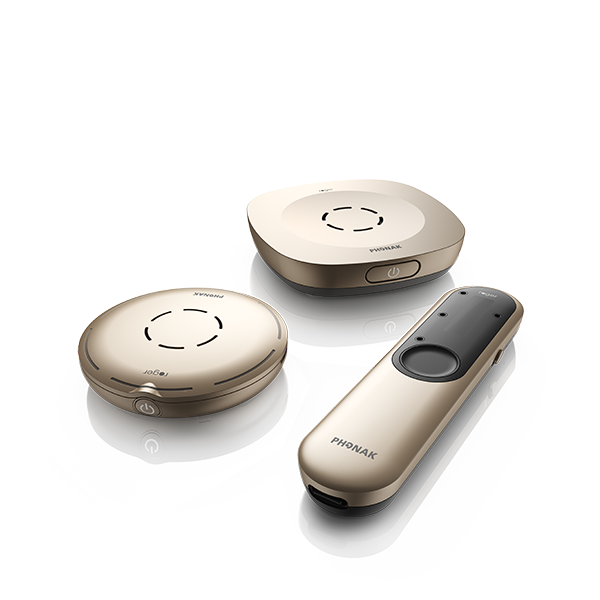
For example, wireless microphone systems such as the Phonak Roger On can help speech stand out more clearly in noisy environments, while meeting microphones like the Phonak Roger Table Mic can support communication during team discussions and briefings.
In larger training or meeting areas, soundfield systems such as the Phonak Roger DigiMaster can help distribute clearer speech evenly throughout the room.
Hearing Protection Matters Too
While clear communication is essential in noisy workplaces, protecting hearing should also be a key part of workplace safety.
Industrial environments such as factories, warehouses and constructions sites often expose employees to prolonged loud noise from machinery and equipment. Over time, repeated exposure to high noise levels can contribute to permanent hearing damage.
Protecting hearing is not only about long-term hearing health, it also supports concentration and creates safer workplaces for everyone.
Depending on the role and environment, these are just a few measures you could consider putting in place:
- Ear defenders or ear muffs
- Custom hearing protection
- Filtered earplugs designed to reduce harmful noise while allowing speech awareness
Browse earplugs and sound level meters on our website.
Workplace Inclusion Starts Here
At Connevans, we’ve been helping organisations make their workplaces more accessible for over 60 years. Whether you’re looking for a simple setup for small team meetings or a scalable solution for larger environments, we’ll help you choose the right equipment for your needs. Our team can also provide bespoke quotes, expert advice, and training to ensure your staff get the very best from their tech.
Need friendly, expert advice? Give us a call, we're always happy to help.
Email us: info@connevans.com
Call us: 01737 247571