
Why Can't I Hear Clearly With Hearing Aids? How Personal Radio Aids Can Help


Many hearing aids ask the same question:
"My hearing aids help, but why do I struggle to hear conversations in noisy environments like restaurants or family gatherings?"
If this sounds familiar, you're not alone.
While modern hearing aids and cochlear implants are remarkable bits of tech, they can't completely recreate natural hearing.
Why Hearing Aids Don't Always Solve Every Hearing Problem
Our ears and brains work together to do something quite amazing.
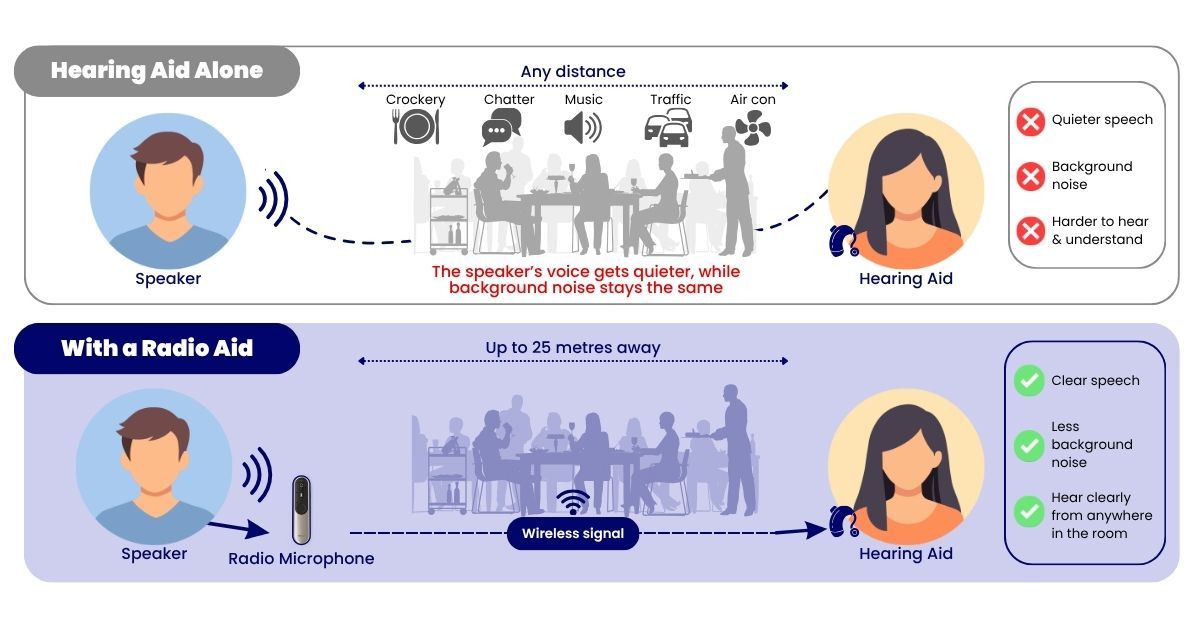
In a busy room, most people can naturally focus on the voice they want to hear while filtering out background noise. Hearing aids can't fully do this. Instead, they amplify sounds around you, making both speech and background noise louder.
It's a bit like trying to have a conversation while someone turns up the volume on everything else happening around you.
Unlike glasses, which can often correct vision almost perfectly, hearing aids don't fully restore hearing. They help you hear more sounds, but some listening situations remain challenging.
When Do Hearing Aids Work Best?
Hearing aids generally perform best when:
- The person speaking is close to you
- They are facing you
- There isn't too much background noise
- You're having a one-to-one conversation
In these situations, speech is clearer and easier to understand.
Unfortunately, real life doesn't always cooperate! Conversations often happen across rooms, in busy cafes, at family gatherings, during exercise classes, at work meetings and while watching television.
These are all situations where distance and background noise can make speech harder to follow.

Why Distance Makes Hearing More Difficult
One of the biggest challenges for hearing aid users is distance.
Imagine using your phone to record your voice.
When the phone is close to your mouth, your voice sounds clear and distinct. Move the phone to the other side of a busy room and your voice becomes quieter while background noise becomes more noticeable.
Hearing aids work in a similar way.
Because the microphones sit on or in your ears, sounds become harder to hear clearly as the speaker moves further away. Increasing the volume may make speech louder, but it also increases unwanted background noise.
In some environments, background sounds can become almost as loud as the voice you're trying to hear.
The Solution: Personal Radio Aids
A personal radio aid helps overcome the challenges of distance and background noise by bringing the microphone closer to the speaker.
Instead of relying solely on the microphones in your hearing aids, the person speaking wears or holds a wireless microphone.
Their voice is then transmitted directly to your hearing aids.
This means you hear their voice clearly, even if they are across the room or surrounded by background noise.
Benefits of Personal Radio Aids
Hearing aid and cochlear implant users report:
- Clearer speech
- Reduced background noise
- Easier conversations
- Less listening fatigue
- Greater confidence in social situations
- Better access to meetings and presentations
The experience can feel just like the speaker is standing right beside you, regardless of where they are in the room.
What Is a Personal Radio Aid?
A personal radio aid is a wireless listening system designed to improve speech understanding for hearing aid users.
They are particularly effective in situations where hearing aids alone may not provide enough clarity.

Common Uses for Radio Aids
Personal radio aids can be beneficial:
- At family gatherings
- In restaurants and cafes
- During work meetings
- In educational settings
- At places of worship
- On guided tours
- During sports and hobbies
- While travelling
Many users find they can once again enjoy activities that had become tiring or frustrating because of hearing loss.
How Does a Radio Aid Work?
A personal radio aid consists of two main components:
1. The Microphone (Transmitter)
The transmitter is worn, held or placed near the person speaking.
It can also be connected directly to devices such as:
- Televisions
- Computers
- Mobile phones
2. The Receiver
The receiver delivers the sound directly to your hearing aids.
Because the microphone is positioned close to the speaker, you receive a clear speech signal regardless of:
- How far away they are
- Which direction they are facing
- The amount of background noise in the room
Will a Radio Aid Work with My Hearing Aids?
In many cases, yes.
There are several ways radio aids can connect to hearing aids, depending on the hearing aid manufacturer and model.
Direct Connection
Many modern hearing aids are compatible with radio aid technology and can receive signals directly.
Plug-In Receivers
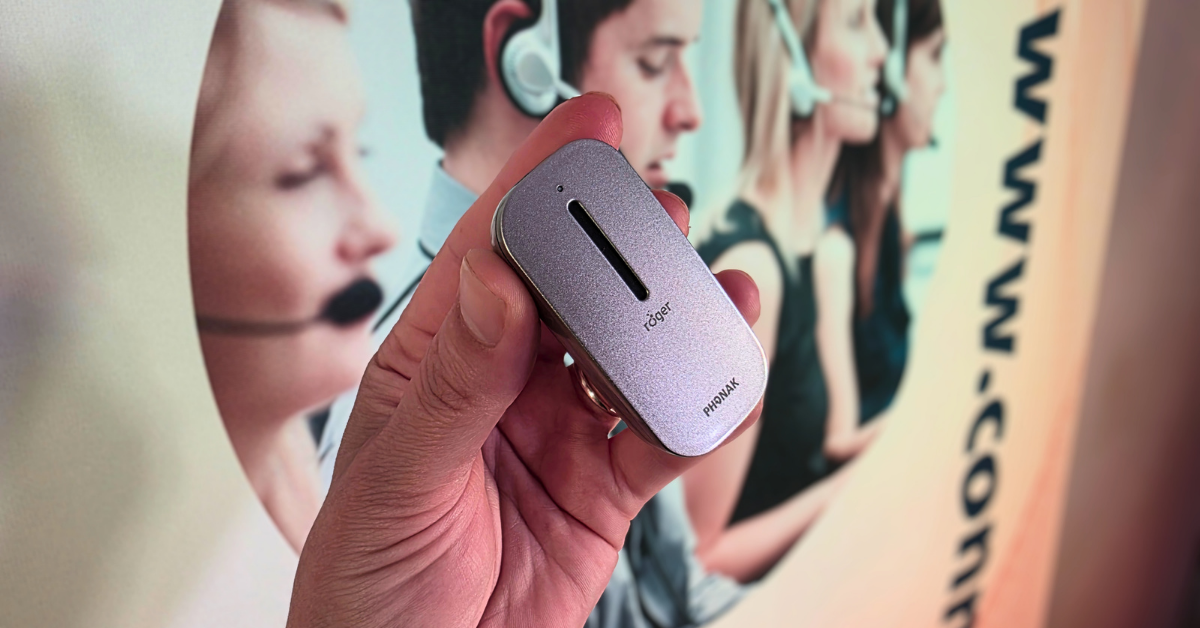
Some hearing aids use small receivers, such as Roger X receivers, to connect to wireless microphones. For some hearing aids, they attach via a shoe added to the bottom of the aid. For others, they plug into an accessory like the Oticon Edumic or the Cochlear Mini Microphone 2+.
Neckloops and Telecoils
Other hearing aids can connect using a neckloop and the hearing aid's telecoil (T-coil) setting.
If you're unsure which option is compatible with your hearing aids, it's worth checking your hearing aid model and getting some advice from our team of specialists.
Beyond Conversations: Other Helpful Hearing Solutions
Many hearing aid users benefit from additional assistive listening devices that support everyday communication and independence.
These include solutions for:
- Telephone calls
- Listening to the TV
- Doorbells and alerts
- Alarm clocks
- Fire alarms
- Meetings and presentations
- Home conversations
- Communication while out and about
Combining hearing aids with the right assistive technology can create a hearing solution tailored to your lifestyle.

Finding the Right Hearing Aid Accessories
The world of assistive listening technology can seem confusing at first, but there are solutions available for almost every listening challenge.
Whether you're looking for a personal radio aid, a TV listening system, alerting products or compatible accessories for your hearing aids, understanding your options is the first step towards hearing more clearly and confidently.
Need Help Choosing?
Not sure which radio aid or hearing aid accessory is right for you?
Our team can help you identify compatible products and explain the options available for your hearing aids, helping you find the solution that best fits your needs and lifestyle.
? Email us: info@connevans.com
? Call us: 01737 247571