
65 Years of Radio Aids: Just How Has Assistive Listening Technology Changed?

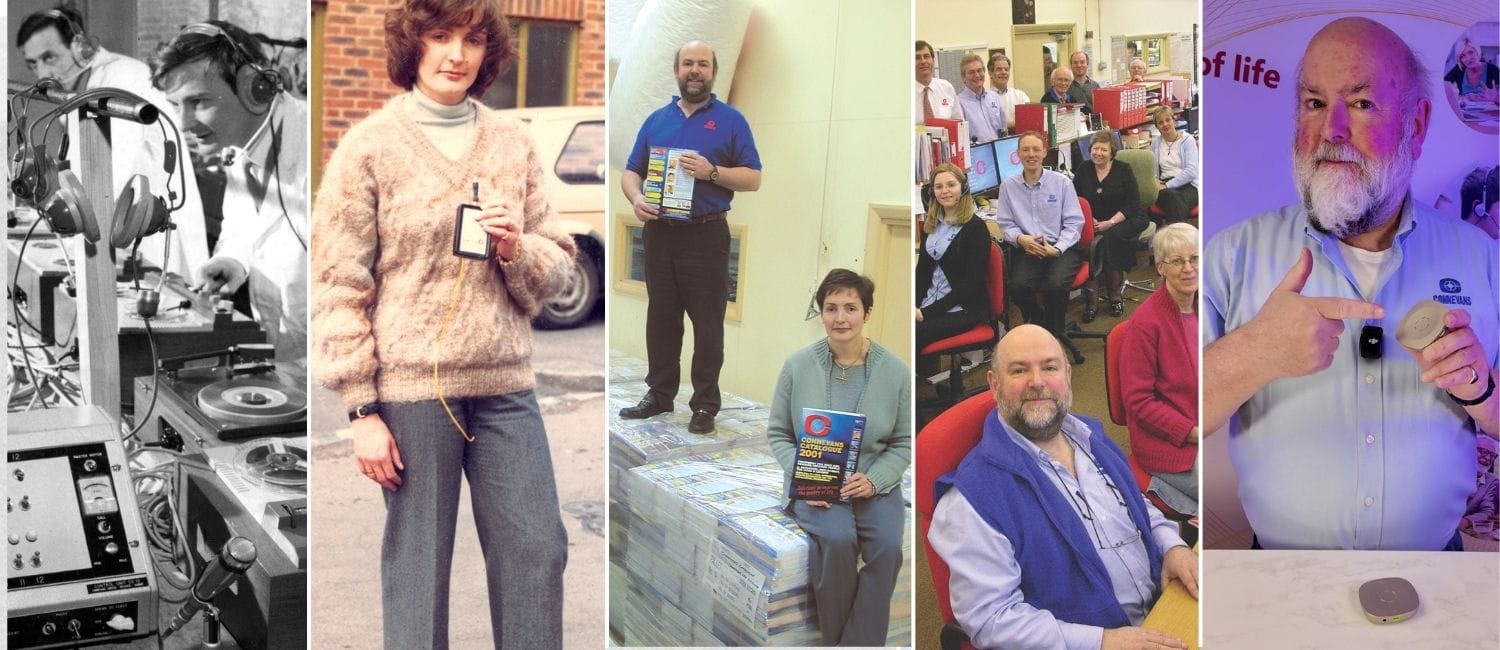
From bulky radio aids worn around the neck, to tiny microphones that can connect to hearing aids, phones, computers and more - but just how much has it changed over the past 65 years?
This year, we’re celebrating 65 years of Connevans - and when you’ve been around for that long, you inevitably end up with a few things gathering dust in the corner…
Recently, we took a trip to our very unofficial Connevans museum (a corner of our HQ where we keep some of the equipment we’ve collected over the years).
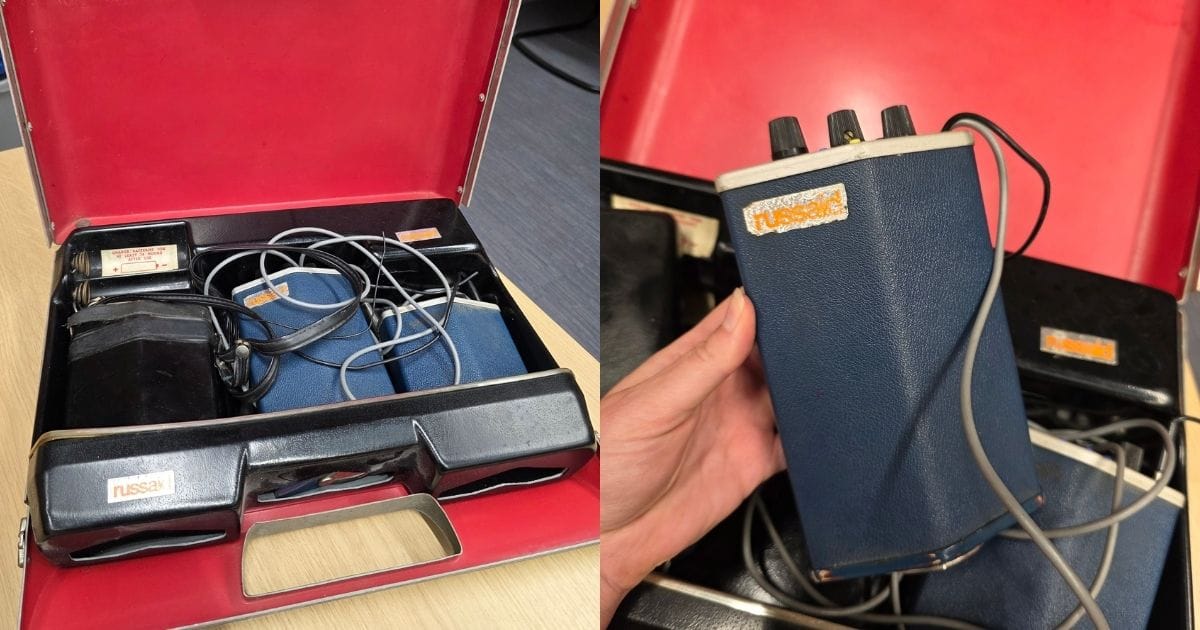
Among the boxes and old equipment, we found something particularly interesting: an old radio aid called the Russaid.
We don’t know everything about it, but we do know it dates back to the late 1960s - making it almost as old as Connevans!
It got us thinking… what would someone using an assistive listening system in the 1960s have experienced compared with someone using one today?
The difference is pretty remarkable!
What is a Radio Aid?
A radio aid is an assistive listening system designed to help deaf and hard of hearing people hear speech more clearly, particularly when there is distance or background noise. Traditional radio aids used a transmitter and receiver to send sound directly to the listener.
Then: the Russaid
The Russaid is a fascinating reminder of how far assistive listening technology has come, but it’s also worth remembering just how revolutionary equipment like this was when it was introduced.
Around 60 years ago, radio aids looked very different. The Russaid was large and bulky, with the transmitter and receiver designed to be worn around the neck. Compared with today’s equipment, it would have been a pretty sizeable piece of equipment, especially for a child to carry around!
The Russaid used FM technology to transmit sound from the transmitter to the receiver. In an educational setting, this would have typically meant the teacher speaking into the transmitter and a child wearing the receiver, allowing the teacher’s voice to be transmitted directly to them.
For children who were deaf or hard of hearing, that could bring a whole new level of speech clarity into the classroom.
That might sound pretty straightforward now, but back then it was seriously clever technology, and the advanced technology we take for granted today simply didn’t exist yet.
There were no smartphones, Bluetooth headphones or laptops in everyday use. Computers weren’t something most people had sitting on their desks or in their homes, so there was no need for a radio aid to connect to a whole collection of personal devices.
Radio aids were generally designed around fewer listening situations. For a deaf child in school for example, the focus was very much on helping them hear the teacher.
It’s worth remembering that we can’t be certain of every specification of this particular radio aid, and while it may seem simple by today’s standards, for its time it represented a significant step forward in assistive listening technology.
It’s one thing to read about the differences, but seeing the Russaid in the image below really brings home just how much things have changed since the 1960s.
Now: Phonak Roger On
Fast forward to today and radio aids looks very different.
Take the Roger On for example. Instead of a large receiver worn around the neck, you have a compact microphone that can fit comfortably in your hand. In many situations, the user’s hearing aids themselves act as the receiver.
It’s not just about making one person’s voice louder anymore…
The Roger On is also designed to be used in a range of different ways depending on the listening situation.
One-to-one conversations
The person speaks into the microphone and their voice can be sent directly to the user’s hearing aids.
Group conversations
In Table Mode, the microphone picks up voices from around a table, helping users follow conversations with multiple people.
Following the voice
Pointer Mode helps focus on the person that the microphone is pointing towards - useful when several people are speaking or you’re on the move.
Presentations and teaching
Presenter Mode allows the microphone to be worn or used by the person speaking, making it useful in classrooms, meetings and presentations (and it’s very lightweight, you could wear it all day and barely notice!)
Connecting to technology
Perhaps one of the biggest differences between then and now: the microphone can also connect to other technology.
Computers, tablets and other media devices can become part of the listening setup, making it possible to use the system for things like watching videos, listening to media or joining online activities.
The technology can also work with different hearing aid setups. Depending on the hearing aids, Roger can connect using RogerDirect, a Roger X receiver, or a Roger neckloop for hearing aids with a telecoil setting.

From One Classroom to Almost Anywhere
Perhaps the biggest change isn’t actually the size of the technology, but how and where modern radio aids can be used.
An assistive listening system that might once have been primarily associated with the classroom can now be used in all sorts of everyday situations:
- At school or university
- In meetings at work
- In restaurants and pubs
- Watching TV
- Listening to music or other media
- At the gym or in fitness classes
- During group activities
- Chatting at home or in the car
- Out and about with friends and family
The technology has moved from being something you might use for one particular purpose, to something that can support communication across many different parts of everyday life, and that’s a pretty incredible change!

65 years of change - and we’re still here
There’s something quite special about finding a piece of equipment from the 60s sitting in a dusty corner of our building. It’s not just an old piece of technology, it forms part of our history.
Connevans was founded in 1961, so we’ve been around for the entire journey between those early radio aid systems to the sophisticated assistive listening technology available today.
Over the years, we've seen technology change from bulky analogue equipment to increasingly compact, connected and versatile devices.
We've seen new technologies introduced, old technologies replaced and entirely new ways of listening become possible.
Most importantly, we've built up 65 years of knowledge along the way.
While technology might change, the questions our customers ask often remain strikingly similar:
Will this work with my hearing aids?
How do I use it?
What do I need for school?
Can I use it at work?
How can I hear better in a noisy restaurant?
That's where our experience matters. We're not just interested in what's new. We understand where the technology has come from, how different solutions have developed and perhaps most importantly - how to help people work out what might actually be useful for them.
So here's to the next chapter of assistive listening technology. We can't predict exactly what the next 65 years will bring…
but if the journey so far is anything to go by, it's going to be interesting!
If you need help finding the right assistive listening technology or hearing aid accessories for you or someone you know - give us a call, we'd be happy to help!
📧 Email us: info@connevans.com
📞 Call us: 01737 247571
🔗 Shop online: www.connevans.co.uk